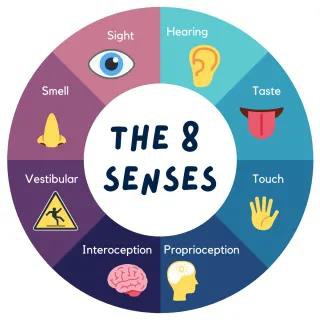
We learn about five senses in school — sight, sound, smell, taste, and touch. But the body actually has MORE hidden senses, and one of the most important ones is Interoception: the sense that tells us what is happening INSIDE our body.
Interoception is our body's internal sense — the ability to perceive and interpret signals from within our own body. It answers the question: "How does my body feel right now?"
This sense picks up physical signals such as heartbeat, hunger, thirst, temperature, the need to use the bathroom, pain, nausea, fatigue, and even emotions felt physically in the body — like butterflies in the stomach before an exam or a tight chest when anxious.
These internal signals are detected by sensory receptors located in our organs, muscles, skin, and other tissues. The information travels through the nervous system to the brain, which then interprets what the body needs and helps us respond appropriately.
Interoception is foundational to our physical health, emotional well-being, and social functioning. It is sometimes called the "eighth sense" and plays a central role in:
When a child accurately senses internal body states, they can respond appropriately — eating when hungry, resting when tired, and calming down when overwhelmed. Without this awareness, self-regulation becomes very difficult.
Emotions have physical components. Anxiety creates a racing heart; anger may feel like heat or tension; sadness can feel heavy. Interoception helps children connect these bodily feelings to their emotional states, which is the first step in managing emotions effectively.
Understanding how our own body feels helps us understand how others might feel. Children with good interoceptive awareness tend to be more empathetic and better at reading social cues.
A child who cannot tell when they are hungry, tired, or need to use the bathroom will find it harder to concentrate, follow routines, and engage in learning. Interoception directly impacts a child's readiness and capacity to function at school and at home.
Interoception helps children recognise pain, illness, and physical discomfort — critical signals that keep them safe and healthy. Children with low interoceptive awareness may not notice injury or illness until it becomes severe.
Children with difficulties in interoceptive processing may present with a wide range of challenges. These children are often misunderstood — labelled as "dramatic," "overreacting," "inattentive," or "not trying hard enough" when, in reality, their nervous system is struggling to read internal signals accurately.
Signs of poor interoceptive awareness in children include:
Interoceptive difficulties are commonly seen in children with Autism Spectrum Disorder (ASD), ADHD, Sensory Processing Disorder (SPD), anxiety disorders, developmental delays, and trauma histories. Identifying and addressing this sense early can make a significant difference in a child's daily quality of life.
The good news is that interoception is a trainable sense. Through consistent, mindful activities, children can gradually improve their awareness of internal body signals. Below are evidence-informed strategies used in occupational therapy practice:
Teach children to pause and scan their body at regular intervals throughout the day. Simple prompts like "How does your tummy feel?" "Are you warm or cold?" or "Is your body fast or slow?" build the habit of internal awareness. Using visuals such as body outlines or feelings charts makes this more accessible for younger children.
Slow, deep breathing activates the parasympathetic nervous system and helps children tune into their heartbeat and breathing rate. Techniques like "balloon breathing" (breathe in to fill the belly like a balloon, slowly let it out) are simple and effective even for young children.
Heavy work activities — pushing, pulling, lifting, climbing, and carrying — provide strong proprioceptive and interoceptive feedback. Activities like animal walks, wall push-ups, carrying a heavy backpack, and playground climbing are all beneficial. These help children understand how their muscles and joints feel, building the body-awareness foundation for interoception.
Simple, playful yoga poses help children focus on how their body feels in different positions. Even 5–10 minutes of guided stretching in the morning or before bed can significantly enhance internal body awareness over time.
Before meals, ask the child to rate their hunger on a simple scale (1 = not hungry at all, 5 = very hungry). After eating, repeat the exercise. Over time, this teaches children to notice and trust their hunger and fullness cues.
Help children connect emotions to their physical sensations. Use body maps or worksheets where they colour in where they feel different emotions in their body. Storybooks about feelings and emotions are also powerful tools for building this vocabulary.
Provide safe opportunities to explore warm and cool sensations — warm baths, cool water play, or gentle temperature contrasts. These activities help children notice and name temperature signals from their body.
For children who struggle with toileting awareness, establish a scheduled routine (e.g., going to the bathroom every 90 minutes) rather than waiting for the urge. Gradually, encourage the child to pay attention to what their body felt like just before they went, building awareness of the signal over time.
After physical activity, encourage children to place their hand on their chest and notice their heartbeat. Compare how fast or slow it feels. Simple pulse checks — counting beats for 10 seconds — teach children to notice and interpret one of their most important interoceptive signals.
For children with significant interoceptive difficulties, structured OT sessions using the Interoception Curriculum (developed by Kelly Mahler, OTD) and sensory integration approaches can provide targeted, individualised support. An occupational therapist can assess the specific nature of your child's interoceptive challenges and develop a tailored intervention plan.
Small, consistent steps at home can make a profound difference. Here are daily habits to incorporate:
Every child's sensory system is unique. If you have concerns about your child's body awareness, emotional regulation, or sensory processing, early intervention through occupational therapy can make a transformational difference. You are not alone — and help is available.
Located in Shyamal, Ahmedabad, Madhumita – The Occupational Therapy Centre provides specialised occupational therapy services for children and families. Our team is committed to empowering every child to participate fully in daily life through evidence-based, child-centred care.
For appointments and consultations, please contact our centre.